



Mandrake (Mandragora) - live plant
Mandrake (Mandragora) - live plant
Live mandrake plant, genus Mandragora, a Mediterranean member of the Solanaceae family. It is probably the most legend-laden plant in all of Europe, and one of the few whose root was sold for its weight in gold for centuries.
Couldn't load pickup availability
Existe aussi

Expédié depuis le Jura - Paiement sécurisé - Retrait possible à Francheville
Toxic plant: precautions
Toxic plant: precautions
All parts of this plant are toxic, the root in particular. It is sold exclusively as an ornamental and botanical collector's plant.
- Never ingest, in any form or at any dose
- Handle with gloves and wash your hands afterwards
- Keep out of reach of children and pets
- Do not plant near a vegetable garden or a play area
- In case of accidental ingestion, call 15 (French emergency services) or a poison control centre
Sale restricted to adults (18 and over).
Botanical description
Botanical description
Mandrake forms a rosette of large leaves spread flat on the ground, from which emerge purplish or whitish flowers depending on the species, followed by yellow fruits resembling small apples. The plant is acaulescent: it has practically no stem.
All its mystery lies in its root, thick, fleshy and often forked, which can suggest a human silhouette. It is this resemblance, and nothing else, that has built two thousand years of legends around it.
Cultivation
Cultivation
A Mediterranean plant with a reversed cycle: it grows in autumn and winter, flowers as winter ends, then goes dormant and disappears completely in summer. Foliage turning yellow in June is not a problem, it is simply how the plant works.
It needs deep, very free-draining soil, since its root grows deep, and a sunny position. Standing moisture in summer, during dormancy, is what kills it most surely. Mark its location, as it becomes invisible for several months a year.
Two thousand years of legends
Two thousand years of legends
Theophrastus, in the 4th century BCE, already describes a codified harvesting protocol: draw three circles around the plant with a sword, cut while facing the rising sun, dance around it. The circle creates an enclosed space that gives a hold over the plant.
In the Middle Ages, the ritual grew harsher. The gatherer now had to tie the root to a dog and lure the animal away, on pain of death: the plant was said to scream when pulled up, and to strike anyone who heard it with a curse. Depending on the sources, these tales take place on nights of the full moon.
The most persistent belief held that mandrakes growing at the foot of gallows were fertilised by the hanged. Washed, macerated and matured in a cloth, the root became a homunculus, a little plant-man supposed to remain faithful to its master and bring him prosperity. Its rarity and the danger attributed to harvesting it explain its price, which was all the higher when its shape was human.
Finally, it appears in the lists of ingredients attributed to witches' sabbath ointments. As early as the 16th century, the Spanish physician Andrés Laguna argued that the experiences reported by women accused of witchcraft could be explained by the substances contained in these preparations, made from hemlock, nightshade, henbane and mandrake.
These elements belong to cultural history and ethnobotany. They document what authors have written over the centuries, and do not constitute any indication for use.
Frequently asked questions
Frequently asked questions
Why does it disappear in summer?
Because it is a Mediterranean plant with a summer rest period. It grows during the cool, damp season and sleeps through the drought. A pot that looks empty in July contains a root that is very much alive.
Does the root really look like a human body?
Sometimes, when it divides into two or three main branches. It is a morphological coincidence, which gatherers of old would in fact accentuate by trimming the root, to sell it at a higher price.
Is it difficult to grow?
It is not fussy, but it is uncompromising on one point: drainage. Soil that stays wet during its summer dormancy rots the root.
When does it flower?
As winter ends, often from February or March, at ground level, in the centre of the leaf rosette.
Also worth exploring: our plant folklore plants and our rare plants.


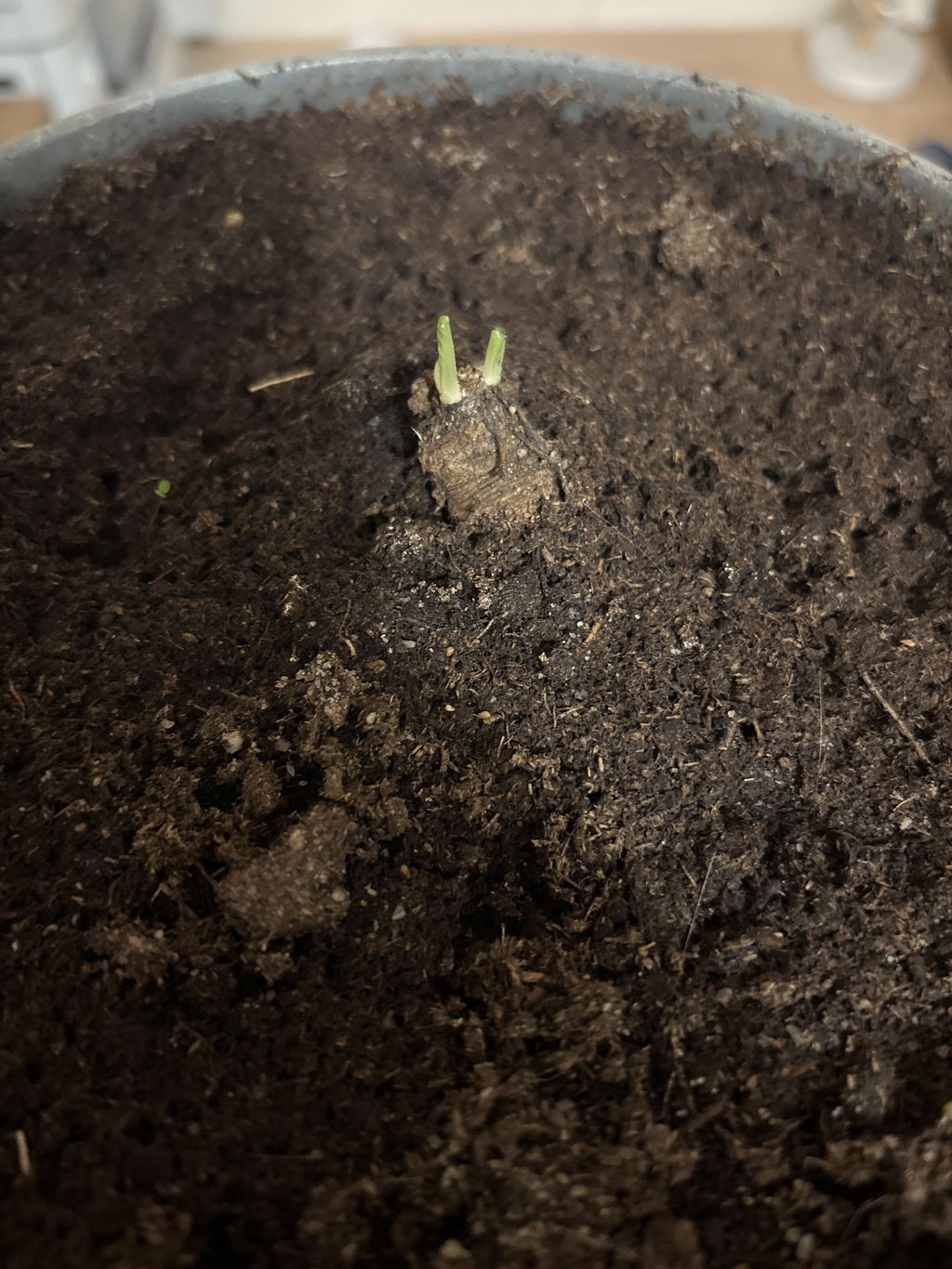
Un beau plan vigoureux, elle commence à faire des feuilles , très bien emballé avec un petit manuel très bien expliqué, merci pour tout !! Je repasserai commande :)
Il est vrai que le colis est resté dans votre lieu d'envoi pendant 5 jours avant que le personnel de Mondial Relau=y exécute leur travail.
Très bien arrivé et chouchouté par mes soins. Elle s'est habituée à son envirronnement et se porte à merveille.
Un site qui mérité d'être connu. Un service de livraison par Mondial Relay (un peu chiant) mais tout s'est bien passé.
Uh Grand Merci à eux/elles.
Bonjour, merci pour votre avis!
Concernant l'expédition en mondial relay ceci est un choix, vous pouvez aussi utiliser colissimo:)
Bonne fin de journée
LEGBA
La raciine est bien développée , l'emballage très bien