

Absinthe wormwood (Artemisia absinthium) - live plant
Absinthe wormwood (Artemisia absinthium) - live plant
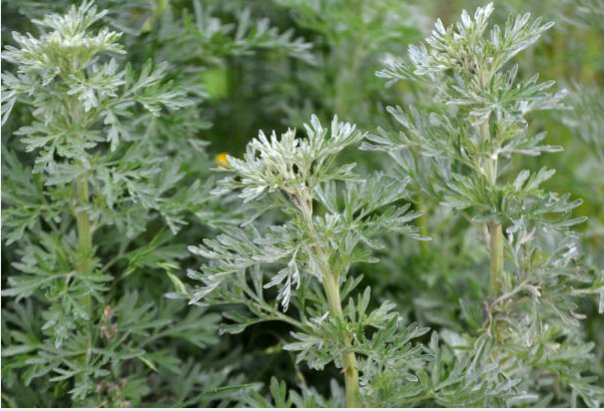
Live Artemisia absinthium plant, grand wormwood. A perennial with finely cut, silky, silver-grey foliage, whose powerful scent is released at the slightest touch. It is one of the most beautiful grey-leaved plants in the garden.
Couldn't load pickup availability

Expédié depuis le Jura - Paiement sécurisé - Retrait possible à Francheville
What you receive
What you receive
- A live, rooted plant
- Sold as an ornamental and aromatic collector's plant
- Packaging suited to live plants
Precautions
Precautions
Wormwood contains thujone, a molecule that is neurotoxic in high doses. This plant is sold as an ornamental and collector's plant: do not consume it, and keep it out of reach of children and pets.
Botanical description
Botanical description
Artemisia absinthium is a bushy perennial of the Asteraceae family, reaching 80 cm to 1 metre. Its foliage is two to three times divided and covered in a silky white down that gives it its characteristic silvery hue and a texture that is soft to the touch.
The summer flowering, in small yellow flower heads, remains discreet. As with most artemisias, the appeal lies in the foliage: its colour, its texture, and its very recognisable bitter, camphor-like scent.
A local plant
A local plant
Wormwood is closely tied to our region. It was in the Val-de-Travers, just across the border, and then in Pontarlier in the Haut-Doubs, that the distillation of the liqueur bearing its name was born and developed, before it was banned in France in 1915 and rehabilitated a century later.
Pontarlier is an hour from our greenhouse. Growing a wormwood plant in the Jura or the Doubs is not about raising an exotic curiosity: it is about putting back in the ground a plant that shaped the economy and identity of this corner of France for a century.
Growing
Growing
It is an easy plant, even a tough one. It wants full sun and poor, dry, free-draining soil: the richer the soil, the floppier its growth and the more it loses its silver. It copes very well with drought and cold.
Cut it back at the end of winter to keep it compact, otherwise it becomes bare at the base. It is known to hinder the growth of plants placed too close: give it space, and avoid planting it in the middle of a tightly packed bed.
Frequently asked questions
Frequently asked questions
What is the difference from sweet wormwood?
The foliage and the life cycle. Wormwood is perennial and silver-grey. Sweet wormwood is light green, taller, and dies at the end of the season.
Why is my wormwood losing its silver colour?
Usually because it is overfed or overwatered, or because it lacks sun. It is a plant for dry, lean ground.
Does it bother its neighbours in the garden?
Yes, this is documented: it inhibits the development of certain nearby plants. Plant it on its own or along an edge, not in the heart of a bed.
Is it hardy?
Very. It gets through the winters of eastern France without difficulty, provided its roots are not sitting in water.
Also worth exploring: our aromatic plants, our folklore plants and our rare plants.

