

Mountain arnica (Arnica montana) - seeds
Mountain arnica (Arnica montana) - seeds
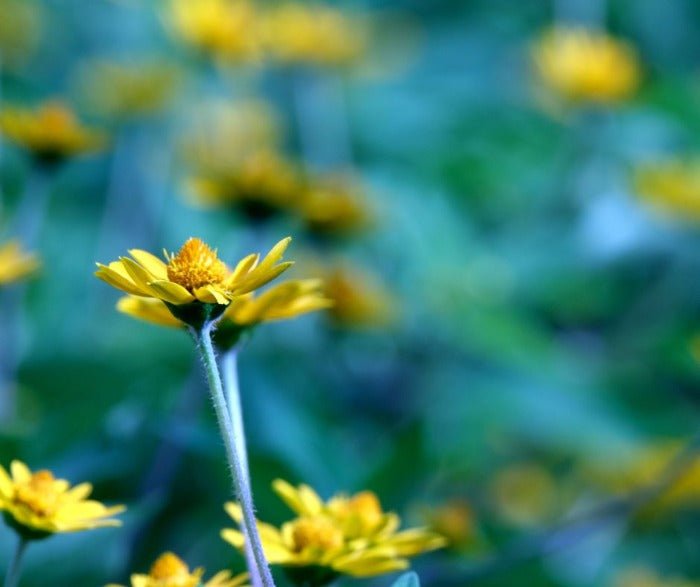
Mountain arnica (Arnica montana): seeds of a perennial from poor, acidic high-altitude meadows, with large orange-yellow flower heads borne on an almost bare stem. It is a demanding and slow plant, and it is best to know its requirements before sowing.
Couldn't load pickup availability
Expédié depuis le Jura - Paiement sécurisé - Retrait possible à Francheville
What you receive
What you receive
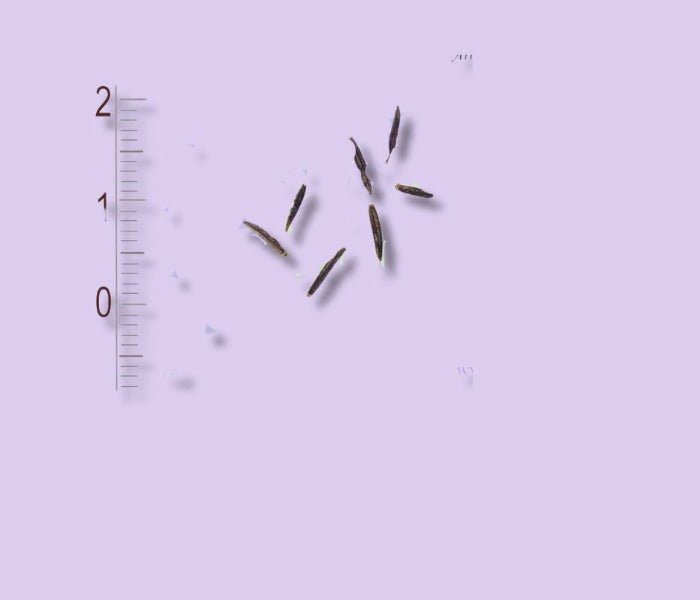
A 0.2 gram packet, about 150 seeds. They are elongated dark brown achenes, topped with a tuft of stiff hairs that makes them fly: open the packet away from draughts.
Sowing
Sowing
Two conditions determine success, and they are strict.
Cold first. Sow in autumn in a seed tray left outdoors all winter, or stratify for four to six weeks in the refrigerator at 2 to 5 °C in moist sand before sowing in spring.
Then light. Sow on the surface, without covering, and keep moist by misting, at only 15 to 18 °C: above 20 °C, germination drops. Allow three to six weeks, with irregular emergence. A rate of 30 to 50% is already a good result for this species.
Prick out into small pots in a lime-free substrate, ericaceous compost mixed with sand, then plant out 25 cm apart.
The mature plant
The mature plant
A basal rosette pressed flat to the ground, from which rises a 20 to 50 cm stem bearing one to three orange-yellow flower heads with irregular, slightly dishevelled ray florets, from May to August. One detail makes it unmistakable: its leaves are opposite, which is rare in the Asteraceae, where alternate leaves are the rule.
It needs acidic, poor, sandy or peaty soil, completely free of lime, cool but free-draining, in full sun and open air. This is the environment of high-altitude pastures. The lime in watering water is enough to make it decline: water with rainwater.
A protected species in the wild
A protected species in the wild
Arnica is in decline in several mountain ranges, and picking it is regulated or prohibited depending on the département. Growing it from seed is precisely the way to have it without taking plants from wild sites.
Collector's seeds
Collector's seeds
These seeds are sold as ornamental and botanical collector's seeds. They are neither a food product nor a health product. We provide no dosage, no preparation method and no expected effect.
Arnica is toxic if ingested: do not consume any part of the plant, and keep it out of reach of children and pets.
Frequently asked questions
Frequently asked questions
Why is my germination so poor?
Three causes, in order of frequency: seeds covered with compost, temperature too high, no cold period. All three can be corrected.
Can it be grown successfully on chalky soil?
Not in open ground. In a pot or container filled with acidic substrate, and watered with rainwater, yes.
How long before it flowers?
Two to three years from sowing. The first year is limited to the rosette.
What is the difference from the arnica sold in garden centres?
What is sometimes sold under this name is often Arnica chamissonis, a North American species that is much more tolerant and easier, but which is not Arnica montana.
Also worth exploring: all our seeds from around the world and our plants with traditional uses.
