

Belladonna (Atropa belladonna) - seeds
Belladonna (Atropa belladonna) - seeds
Belladonna (Atropa belladonna): seeds of a large perennial of the Solanaceae family, found on woodland edges and in forest clearings on limestone in Europe. Its Italian name, bella donna, comes from the Venetian women who used its juice to dilate their pupils.
Couldn't load pickup availability
Expédié depuis le Jura - Paiement sécurisé - Retrait possible à Francheville
Deadly plant: read before ordering
Deadly plant: read before ordering
All parts of this plant are toxic, and it kills. It contains atropine and tropane alkaloids that are active at very low doses. The main danger comes from the berries: black, glossy, sweet and the size of a small cherry, they are attractive to a child, and just a few are enough.
- Never ingest, in any form or at any dose
- Handle with gloves, wash your hands afterwards
- Keep out of reach of children and pets
- Do not plant near a vegetable garden, sandpit or play area
- Remove the berries before they ripen if children have access to the garden
- In case of accidental ingestion, immediately call 15 (French emergency services) or a poison control centre
Sale restricted to adults (18 and over).
What you receive
What you receive
A packet of Atropa belladonna seeds, your choice of 20 seeds, 100 seeds (0.105 gram) or 1,000 seeds (1.05 grams). The seeds are small, brown and reticulated.
Sowing
Sowing
Sow on the surface, without covering: germination is helped by light. A cold period clearly improves results: sow outdoors in autumn, or give the seeds four to six weeks in the refrigerator in damp sand before sowing in spring at 18 to 20 °C.
Germination is slow and very staggered, from three weeks to several months. Do not empty the seed tray too soon. Prick out wearing gloves, 60 cm apart in all directions.
The mature plant
The mature plant
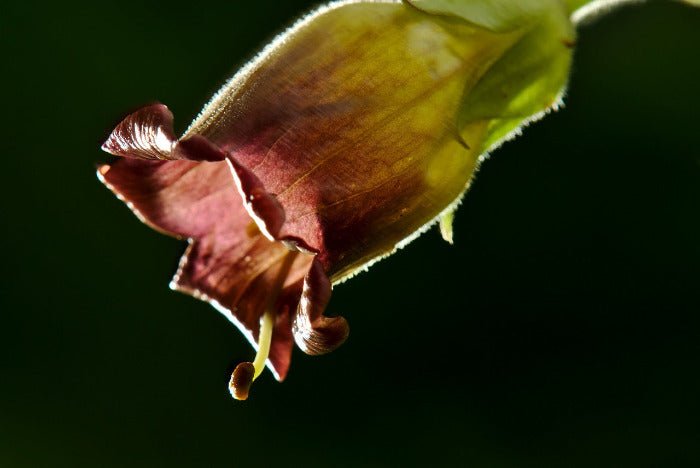
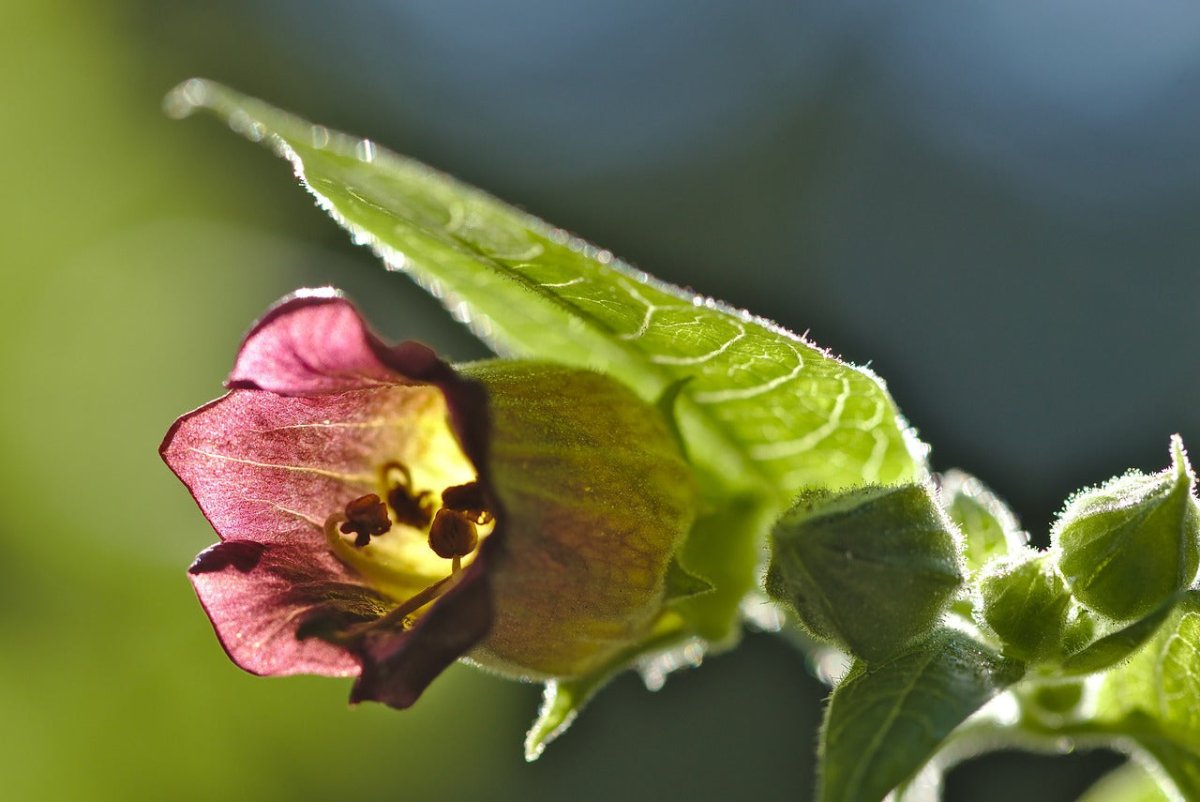
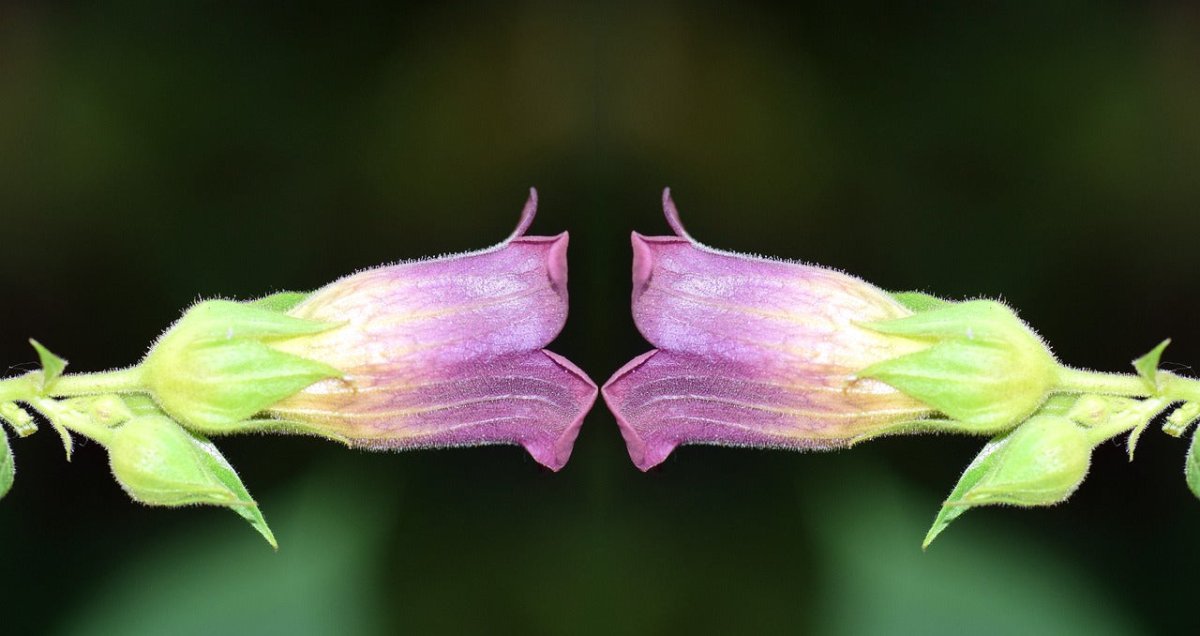
A bushy clump 1 m to 1.50 m tall, with large, alternate oval leaves often grouped in pairs, one large and one small, which is a good identification feature. The flowers, solitary and drooping, are brownish-purple bells with a paler throat, from June to August. The berries, green at first, turn glossy black within a calyx spread out in a five-pointed star, very characteristic.
It grows in partial shade, in chalky, moist soil rich in humus, just as on the edge of a beech wood. Hardy, it dies back in winter and regrows from the rootstock. It self-seeds easily where it is happy.
Collector's seeds
Collector's seeds
These seeds are sold as ornamental and botanical collector's seeds. They are not intended for any consumption or preparation. We provide no dosage, no preparation method and no expected effect.
Frequently asked questions
Frequently asked questions
How can I tell it apart from another garden member of the Solanaceae?
By the five-pointed star-shaped calyx spread wide beneath the black berry, and by the leaves grouped in unequal pairs. It is the combination of the two that is reliable.
Is stratification really necessary?
It is not strictly essential, but without a cold period germination is much weaker and more spread out. Sowing outdoors in autumn remains the simplest option.
Is it perennial in our climate?
Yes, and long-lived. An established rootstock comes back every spring and grows larger year after year.
How does it differ from yellow belladonna?
The variety lutea has pale yellow flowers and translucent yellow-green berries instead of black ones. The toxicity is identical.
Also worth exploring: our other folklore plants.
