

Datura innoxia - live plant (thorn apple)
Datura innoxia - live plant (thorn apple)
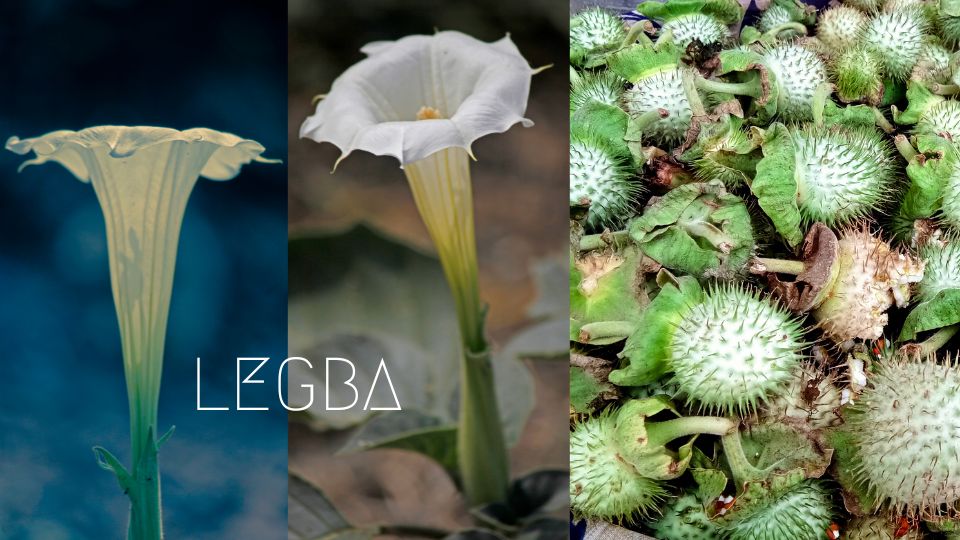
Live Datura innoxia plant, the thorn apple, native to Mexico and the south-western United States. Large white trumpet-shaped flowers that open at dusk and strongly perfume the night.
Couldn't load pickup availability
Existe aussi

Expédié depuis le Jura - Paiement sécurisé - Retrait possible à Francheville
Toxic plant: read before ordering
Toxic plant: read before ordering
All parts of this plant are toxic: leaves, flowers, roots and seeds. It is sold exclusively as an ornamental and botanical collector's plant.
- Never ingest, in any form or at any dose
- Handle with gloves and wash your hands afterwards
- Keep out of reach of children and pets
- Do not plant near a vegetable garden, a sandpit or a play area
- In case of accidental ingestion, immediately call 15 (French emergency services) or a poison control centre
Sale restricted to adults (18 and over).
Botanical description
Botanical description
Datura innoxia belongs to the Solanaceae, the family of the tomato, the potato and deadly nightshade. The plant forms a spreading bush with grey, downy leaves, bearing large white flowers 15 to 20 cm long.
These flowers open only at dusk and wilt the following morning. Their night-time scent and their whiteness point to pollination by hawk moths, the large night-flying moths that feed while hovering. The fruit is a round capsule bristling with spines, hence the name thorn apple.
Growing
Growing
In the French climate, Datura innoxia is grown as an annual or as a greenhouse plant, as it cannot tolerate frost. It needs full sun, free-draining soil and warmth. It dislikes excess water more than drought.
In a pot, allow a generous container: the plant develops a large root system and sulks if it is cramped. Wear gloves for any pruning or handling.
Frequently asked questions
Frequently asked questions
How is it different from a brugmansia?
Both are Solanaceae with trumpet-shaped flowers, but their habit tells them apart immediately: datura is a low bush whose flowers point upwards, brugmansia is a shrub whose flowers hang downwards. Both are toxic.
Is it a hardy plant?
No. It is killed by the first frosts. Grow it as an annual, or bring it in somewhere frost-free if you grow it in a pot.
Can it be grown with children in the house?
We advise against it. The spiny fruit is visually appealing and contains the seeds, the most toxic part of the plant. If you grow it anyway, place it out of reach and remove the capsules before they ripen.
Why do the flowers only open in the evening?
Because it is pollinated by night-flying moths. This is an adaptation, not a growing problem: a flower that stays closed during the day is perfectly normal.
Also worth exploring: our ritual and folklore plants and our rare plants.
