

Ephedra (Ephedra sinica) - seeds
Ephedra (Ephedra sinica) - seeds
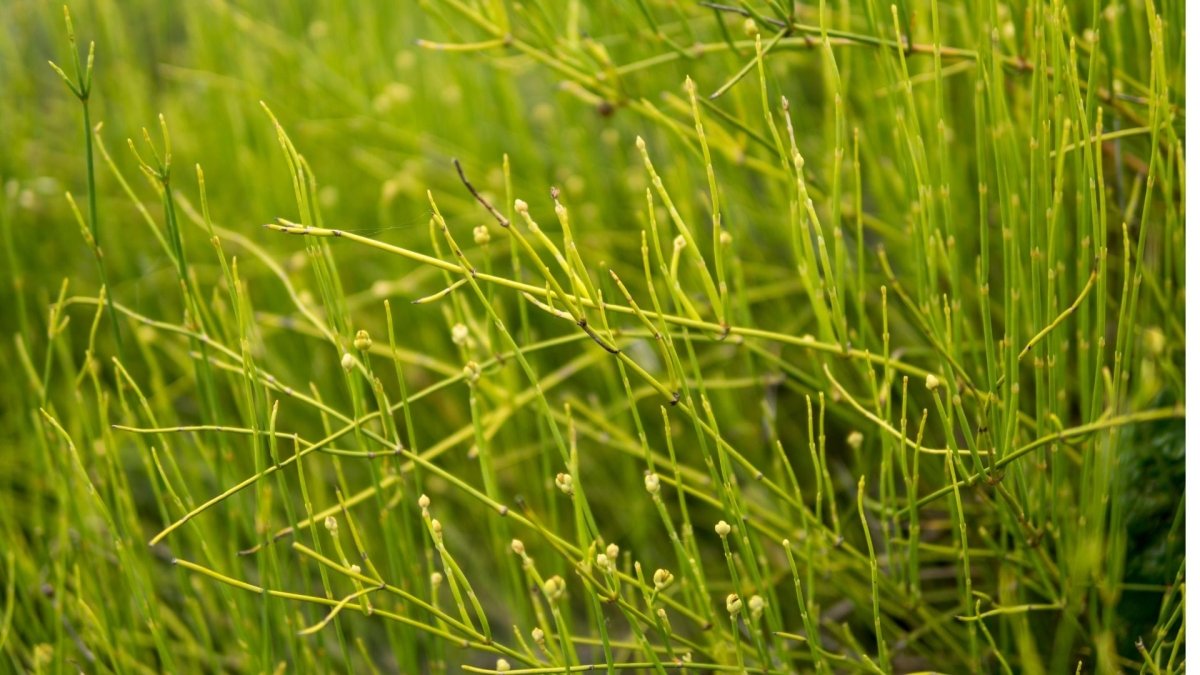
Ephedra (Ephedra sinica): seeds of a shrub from the dry steppes of China and Mongolia, with jointed, almost leafless green stems. It is not a flowering plant: it is a gymnosperm, related to conifers and ginkgo, despite looking like a horsetail or a rush.
Couldn't load pickup availability
Expédié depuis le Jura - Paiement sécurisé - Retrait possible à Francheville
Read before ordering
Read before ordering
This plant contains ephedrine-type alkaloids. These seeds are sold as ornamental and botanical collector's seeds, and on that condition only.
- Never ingest any part of the plant, in any form or at any dose
- Do not prepare as an infusion, a decoction or a powder
- Any extraction of ephedrine is illegal: ephedrine is a drug precursor subject to regulatory control
- The decision of 8 October 2003 also prohibits magistral, officinal and hospital preparations containing ephedra or ephedrine
- Keep out of reach of children and pets
We provide no dosage, no preparation method and no expected effect. Sale restricted to adults (18 and over).
What you receive
What you receive
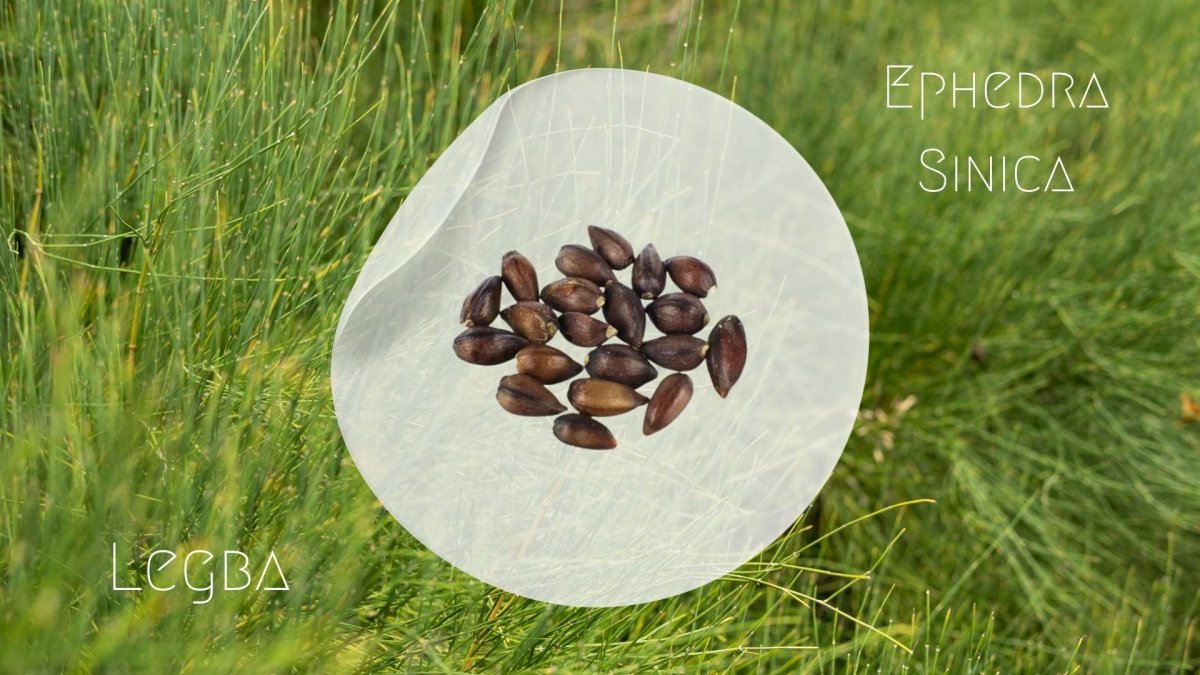
A packet of 100 Ephedra sinica seeds. They are small, hard, brown seeds, held in fleshy red cones on the female plants.
Sowing
Sowing
The seed needs cold. Stratify for four to six weeks in the refrigerator at 2 to 5 °C in moist sand, or sow in autumn in a seed tray left outdoors all winter. Then sow 5 mm deep in a very sandy, perfectly free-draining substrate, at 15 to 20 °C.
Germination is slow and irregular, three to eight weeks, and the rate remains moderate: sow generously. Water sparingly. This is a cold-desert plant: too much water at sowing kills more seedlings than drought does.
The mature plant
The mature plant
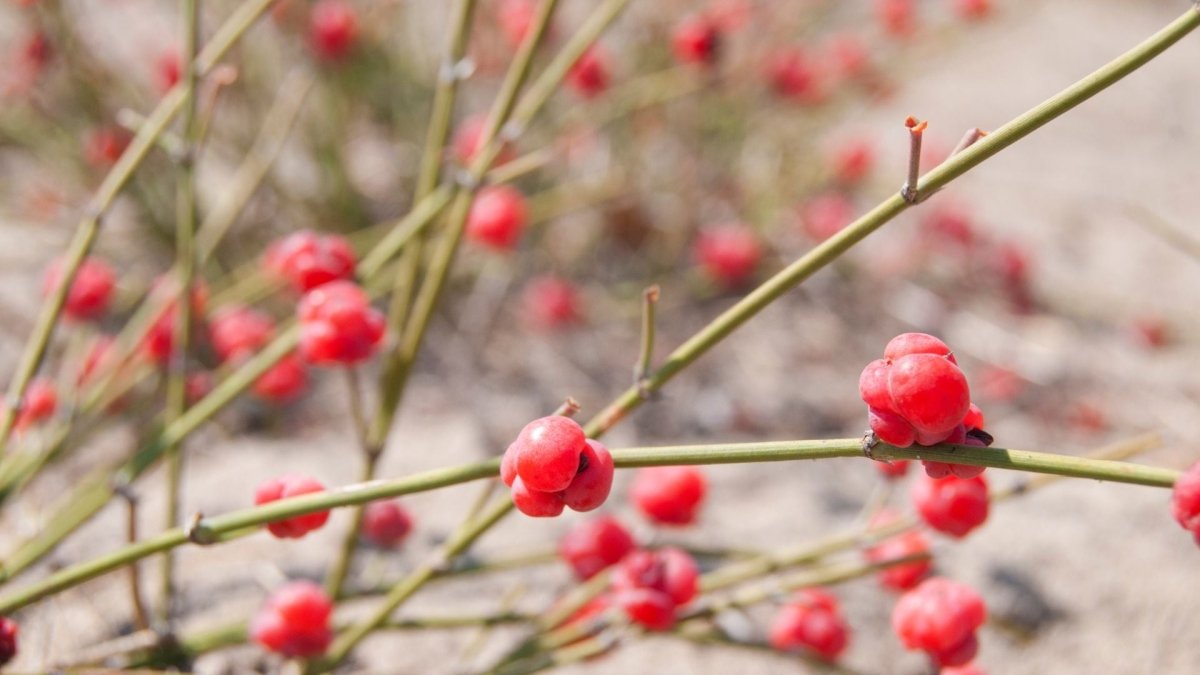
An upright, bushy shrublet 30 cm to 1 m tall, made up of grooved, jointed green stems whose leaves are reduced to tiny scales at the nodes: the stem carries out photosynthesis, as in brooms. The species is dioecious; at the end of summer the female plants bear small cones that have become fleshy and red, often mistaken for berries.
It is very hardy, unbothered by wind and drought, and requires poor, stony, dry soil in full sun. Its only fear is stagnant winter wet. It is a plant for dry rock gardens, for spots where nothing else will grow.
Frequently asked questions
Frequently asked questions
Why do you say it is not a flowering plant?
Because it does not produce flowers. Ephedra belong to the gnetophytes, a small group of gymnosperms, like pines and ginkgo. What looks like a red berry is a cone whose scales have become fleshy.
Does it withstand cold?
Very well, it comes from regions with harsh, dry winters. In our climates, it is winter wet that kills it, not the temperature.
Do you need two plants to get cones?
Yes, the species is dioecious. Sow several seeds and keep at least one plant of each sex, which cannot be told apart before fruiting.
Where should I plant it?
Rock garden, dry bank, low wall, or a large pot of sandy substrate. Choose a spot away from paths and the vegetable garden, and clearly marked.
Also worth exploring: our other seeds from around the world and our botanical curiosities.
