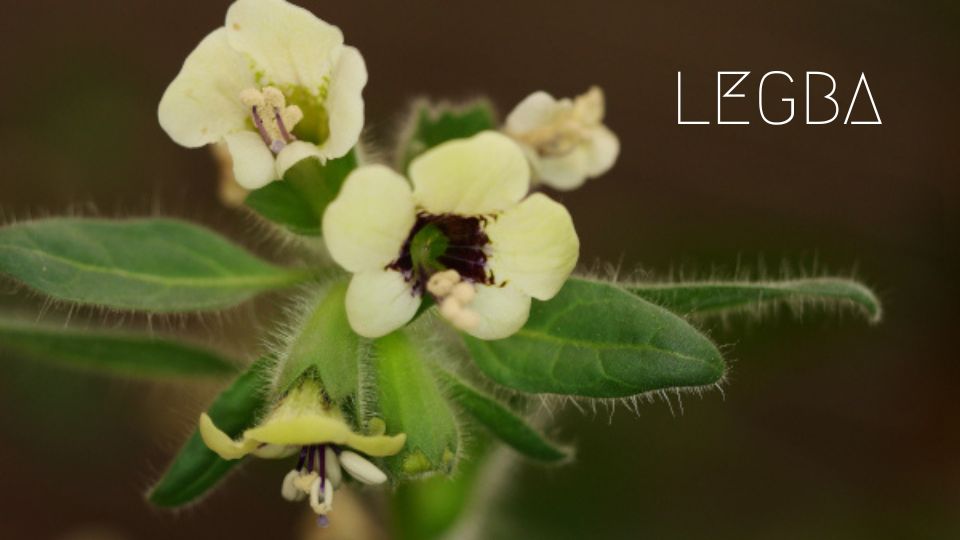
Henbane - live plant (Hyoscyamus)
Henbane - live plant (Hyoscyamus)
Live henbane plant, genus Hyoscyamus, a member of the Solanaceae from Europe and the Mediterranean basin. A plant with downy, sticky foliage and purple-veined flowers, inseparable from the imagery of European witchcraft.
Couldn't load pickup availability
Existe aussi


Expédié depuis le Jura - Paiement sécurisé - Retrait possible à Francheville
Toxic plant: read before ordering
Toxic plant: read before ordering
All parts of this plant are toxic. It is sold exclusively as an ornamental and botanical collector's plant.
- Never ingest, in any form or at any dose
- Handle with gloves and wash your hands afterwards
- Keep out of reach of children and pets
- Do not plant near a vegetable garden, sandpit or play area
- In case of accidental ingestion, immediately call 15 (French emergency services) or a poison control centre
Sale restricted to adults (18 and over).
Botanical description
Botanical description
Henbane belongs to the Solanaceae, like belladonna, datura and mandrake. Its foliage is soft, hairy and sticky to the touch, and the plant gives off a strong, unpleasant smell when crushed, which is its most recognisable feature.
The funnel-shaped flowers are pale yellow, traced with a network of purple veins, a very distinctive pattern that cannot be mistaken for any other plant in our regions. The fruits are capsules that open by a lid, like little urns.
A plant of European folklore
A plant of European folklore
Henbane runs through the entire history of so-called witches' plants. It appears in Renaissance treatises on demonology, in the lists of ingredients attributed to sabbath ointments, and in old pharmacopoeias. These mentions belong to cultural history and ethnobotany: they document what writers of the time wrote, and are in no way an indication for use.
Frequently asked questions
Frequently asked questions
White henbane or black henbane?
These are two species of the same genus. Black henbane, Hyoscyamus niger, is the one from temperate Europe and Nordic folklore. White henbane, Hyoscyamus albus, is Mediterranean and has paler flowers. Both are toxic.
Why does it smell so bad?
The smell comes from the glandular hairs that cover the foliage. It is a normal feature of the plant, and even a good identification marker in the field.
Where should I plant it in the garden?
In full sun, in well-drained, rather poor soil, away from paths and food crops. It self-seeds readily: keep an eye out for young seedlings in the following years.
Also worth exploring: our ritual and folklore plants and our rare plants.