

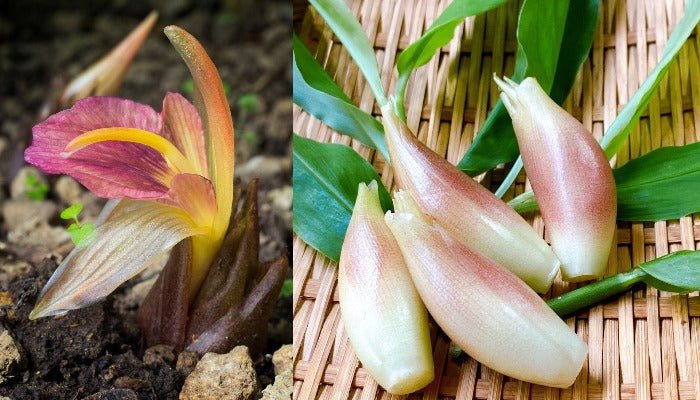
Myoga (Zingiber mioga) - live plant (Japanese ginger)
Myoga (Zingiber mioga) - live plant (Japanese ginger)
Live plant of Zingiber mioga, myoga or Japanese ginger. It is the only truly hardy ginger in our climate, and it grows in shade, where few interesting plants are willing to grow.
Couldn't load pickup availability
Expédié depuis le Jura - Paiement sécurisé - Retrait possible à Francheville
What you receive
What you receive
- A live, rooted plant
- Hardy shade perennial, for the kitchen garden and ornamental
- Packaging suited to live plants
What you harvest is not the rhizome
What you harvest is not the rhizome
That is the big difference from common ginger. With myoga, you do not harvest the root but the flower buds, which emerge straight from the soil at the end of summer, at the foot of the stems.
These firm, crunchy buds have a fresh ginger scent that is far more delicate and slightly lemony. In Japan, they are eaten finely sliced, raw as a condiment, in soups or pickled. The young spring shoots are also used.
If the buds are left, they produce strange, short-lived pale yellow flowers sitting at ground level.
Growing
Growing
Myoga is a woodland-floor plant: it wants shade or partial shade and a cool, rich, humus-rich soil. Full sun scorches its foliage.
It is hardy and gets through winter without protection in most regions of France. The foliage dies back in autumn and the rootstock reshoots late in spring: do not give it up for dead in April.
It spreads slowly by rhizomes and eventually forms a fine colony. A mulch helps it stay cool in summer.
Frequently asked questions
Frequently asked questions
Is it the same as shop-bought ginger?
No. Common ginger is Zingiber officinale, tropical and not hardy, and it is its rhizome that is eaten. Myoga is hardy and it is its flower bud that is harvested.
Is it really hardy?
Yes, that is its great quality. It withstands our winters without any particular protection.
When are the buds harvested?
At the end of summer and the beginning of autumn, when they poke up at ground level at the foot of the stems.
Can it be planted in the sun?
Best avoided. It is a plant of cool shade, and direct sun damages its foliage.
Also worth exploring: our aromatic and edible plants and our rare plants.
