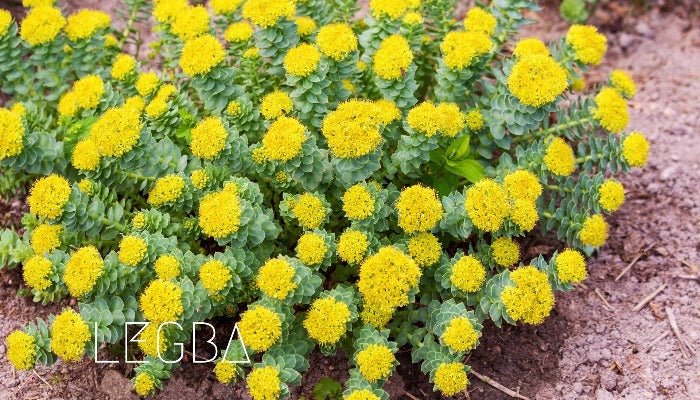


Rhodiola rosea - live plant (roseroot)
Rhodiola rosea - live plant (roseroot)
Live plant of Rhodiola rosea, roseroot, a perennial of Arctic regions and high mountains. A cold-climate succulent of exceptional hardiness, which grows where almost nothing else will.
Couldn't load pickup availability
Existe aussi

Expédié depuis le Jura - Paiement sécurisé - Retrait possible à Francheville
What you receive
What you receive
- A live, rooted plant
- Sold as an ornamental and botanical collector's plant
- Packaging suited to live plants
Botanical description
Botanical description
Rhodiola rosea belongs to the Crassulaceae, the stonecrop and houseleek family. It forms a clump of fleshy stems clothed in thick glaucous leaves, topped in early summer by clusters of small yellow to greenish flowers.
Its epithet rosea does not come from the colour of its flowers, but from its rhizome: freshly cut, it gives off a distinct scent of rose. This is the most reliable identifying feature of the species, and the origin of its other name, golden root.
The plant is dioecious: male and female plants are separate, and their inflorescences differ slightly.
Growing
Growing
Its hardiness is spectacular: it tolerates temperatures down to -35 °C. Cold is never its problem.
What it fears is the opposite: the humid heat of our lowland summers and soils that hold water. Plant it in poor, stony, perfectly free-draining soil, in a rock garden or a pot, in sun, or in partial shade in hot regions. Water sparingly. Too much water rots the rhizome, and that is the number one cause of failure.
It disappears completely in winter and regrows from the rhizome in spring.
Frequently asked questions
Frequently asked questions
Why is it called golden root or roseroot?
Roseroot because of the rose scent of the cut rhizome. Golden root because of the colour of the rhizome and the value it has long held in Nordic regions.
Does it really withstand -35 °C?
Yes. It is a plant of tundras and high altitudes. The issue is not protecting it from cold, but keeping it away from standing moisture.
Can it be grown in the lowlands?
Yes, provided you give it perfect drainage and do not place it somewhere hot and enclosed. In a pot, in a very mineral substrate, it does well.
Why did it disappear this winter?
Because that is its normal cycle. The above-ground part dies back, while the rhizome stays alive and starts again in spring. Mark where it is planted.
This plant is sold as an ornamental and botanical collector's plant. Also worth exploring: our rare plants and our plants with traditional uses.